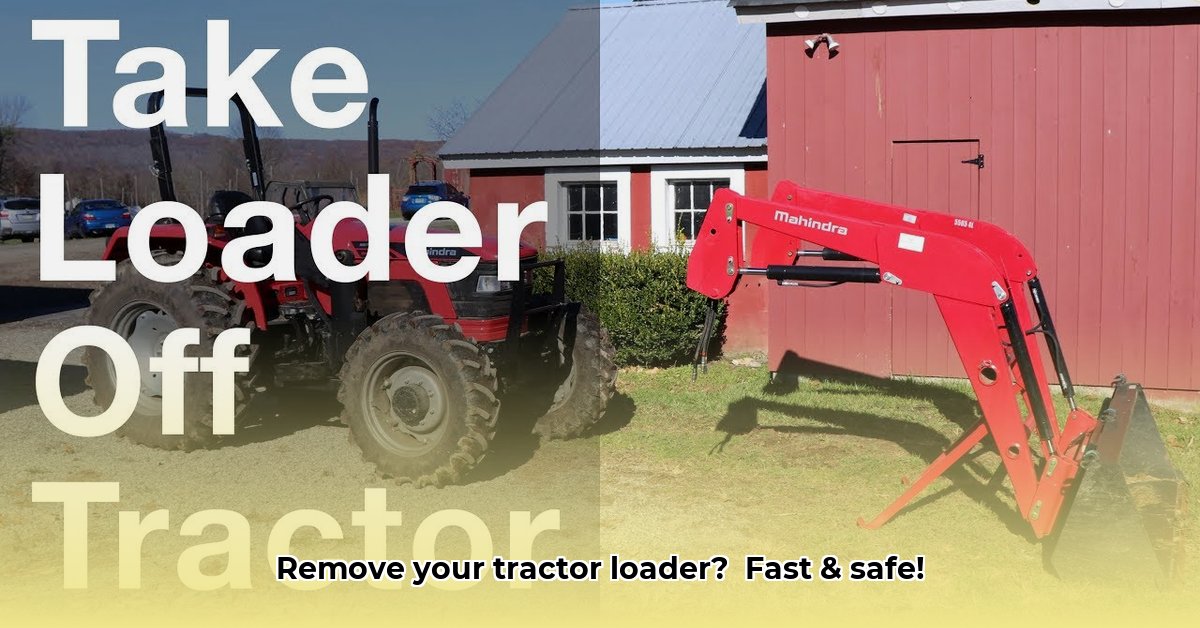
Removing a tractor loader might seem daunting, but with the right approach, it's a straightforward process. This guide provides a step-by-step approach prioritizing safety and efficiency, crucial for maintaining productive and sustainable farming practices. Remember, always consult your tractor's owner's manual for model-specific instructions. Improper removal can lead to damage or injury. Is your time worth risking a costly repair? For more tips on tractor recovery, check out this helpful guide on tractor extraction.
Preparing for Loader Removal: A Safety-First Approach
Before you begin, ensure a safe and organized workspace. This preparation is crucial for avoiding accidents and costly repairs. Why risk injury or damage when a few minutes of preparation could prevent serious issues? Park your tractor on level ground, engage the parking brake securely, and turn off the engine completely. This seemingly simple step is vital for preventing unwanted movement during the removal process.
Gather the necessary tools. These typically include:
- Safety glasses (protect your eyes from debris)
- Work gloves (provide grip and hand protection)
- Appropriate wrenches (sizes will vary depending on your tractor model; consult your manual)
- Pin puller (may be required depending on your loader’s attachment system)
- Container for hydraulic fluid (if applicable)
Step-by-Step Loader Removal: A Detailed Guide
The exact steps may vary slightly depending on your tractor and loader model. Consult your owner's manual for model-specific instructions. This guide provides general steps applicable to most models. Have you ever experienced frustration due to unclear instructions? Taking your time now will pay off later.
Lower the Loader: Fully lower the loader arms to the ground. This minimizes the risk of tipping and ensures stability. This seemingly minor step is crucial for safety and prevents accidental movements that could cause damage.
Identify Release Points: Locate the release mechanisms—levers, pins, or hydraulic controls—that detach the loader. Your owner's manual is your best resource for precise locations. Carefully review the diagrams and instructions before proceeding. Did you know that improper identification of these points is a frequent cause of delays and potential damage?
Release Hydraulic Pressure (If Applicable): Some loaders use hydraulics. If yours does, carefully release the hydraulic pressure according to your owner's manual instructions. This step is critical for safe hydraulic line disconnection. Failing to do this can lead to injury or fluid spills harming the environment.
Disconnect Hydraulic Lines (If Applicable): If hydraulic lines are present, carefully disconnect them. Have a container ready to collect any spilled hydraulic fluid. Hydraulic fluid is harmful to the environment and your health. Cleanliness here protects both you and the environment.
Detach the Loader: Operate the release mechanisms slowly and cautiously. If pins are involved, use a pin puller to avoid damaging them. Rushing this step can easily cause damage or injury.
Lower and Secure the Loader: Once detached, gently lower the loader to the ground. Use wheel chocks or straps to secure it, preventing accidental movement. Why risk damage or injury when securing the loader is so simple?
Troubleshooting Common Issues: Addressing Potential Problems
Even with careful preparation, issues can arise. Being prepared for them can save valuable time and resources.
Stuck Pins or Levers: If pins or levers are stuck, apply penetrating oil and allow it to soak in before attempting to remove them. Avoid excessive force, which could lead to breakage.
Hydraulic Leaks: If you notice hydraulic fluid leaks, identify the source and address it immediately. Tighten loose fittings or contact a qualified mechanic for more complex repairs. Ignoring a leak can lead to substantial repairs down the line.
Difficulty Lowering the Loader: If you have trouble lowering the loader, it may indicate a problem with the hydraulic system. Consult your owner's manual or a qualified mechanic. Don't attempt to force it; this could result in more significant damage.
Safety First: Prioritizing Safe Practices for Sustainable Farming
Safety is paramount throughout the entire process. This not only protects you from injury but also safeguards your equipment and the environment. Why risk your safety or damage your valuable equipment through shortcuts?
- Always wear appropriate safety gear (safety glasses, gloves, sturdy footwear).
- Maintain a clean and well-lit workspace.
- Never rush the process; take your time and work methodically.
- If uncertain about any step, consult your owner’s manual or contact a qualified mechanic.
Summary Table: A Quick Reference for Loader Removal
| Step | Description | Safety Precautions |
|---|---|---|
| Preparation | Level ground; engine off; parking brake engaged; gather tools; consult manual. | Ensure safe and stable working conditions. |
| Lower the Loader | Fully lower loader arms to the ground. | Prevent accidental movement and ensure stability. |
| Release Mechanisms | Locate and operate release levers, pins, or hydraulic controls. | Proceed slowly and carefully, consulting your manual for precise instructions. |
| Hydraulics (If Appl.) | Release hydraulic pressure; disconnect lines carefully; collect any spilled fluid. | Protect yourself and the environment from hydraulic fluid. |
| Detach & Secure | Remove the loader; secure it to prevent movement. | Ensure stability to prevent damage or tipping. |
This guide offers a general overview. Always refer to your tractor's specific owner's manual for detailed instructions and safety precautions. Remember, taking the time for careful and safe removal will save you time, money, and potential injury in the long run.